

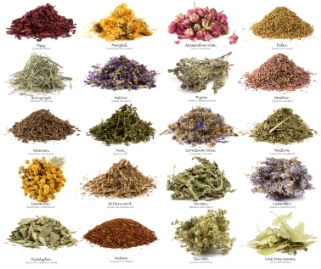
Herbal history: The
history of herbs goes back a long, long time. An Egyptian medical
document, called the Ebers Papyrus, found in
1874 by a German
Egyptologist, Georg Ebers, contains a listing of 800 medicinal
drugs including anise, caraway, coriander, fennel,
cardamom,
garlic, saffron, and poppy seed to name a few. They used these
in medicine, cosmetics, aromatics, cooking, fumigating,
and most important, embalming. It dates back to about 1700 B.C.
and records the use of common herbs such as garlic and juniper
being used medicinally for about 4000 years. (Sara, 2012)
In the days of Ramses III, hemp was used for eye problems just as it may be prescribed for glaucoma today, and poppy seeds were
used to quiet crying children. The Chinese claim an even
earlier record than the Egyptians. Who wrote the first herbal
may not be as
important as the knowledge that herbs have been
used to benefit mankind since way before recorded history. This
knowledge was
handed down for generations until writing was
invented. There is proof of their use by three ancient and great
civilizations: the Chinese,
the Indian medical system, known
as Ayurveda, whose treatments include not only herbs, diet,
and exercise, but also mental and
physical practices (yogas)
intended to help people develop positive emotions and qualities,
and the Egyptians. With the Egyptians, we
get a sense of herbal
history as being closely connected with the history of economic
botany. It is woven into the history of peoples
and civilizations
that depended on wild plants for food, medicine, fiber, and
other raw materials. The need for herbs and spices for
embalming
was instrumental in stimulating trade. (Sara, 2012)
Sara. (2012). The History. Retrieved 07 18, 2012, from Superbherbs.net: http://www.superbherbs.net/lore.htm